The Question Every Homeowner Asks Right After the Job Is Done
The truck pulls away, the technician gives you a thumbs-up, and you’re standing in your driveway staring at your newly leveled concrete. It looks great. But now what? Can you pull your car in tonight? Can the kids ride their bikes over it tomorrow morning? Or are you about to ruin a repair job that cost you several hundred dollars because you moved too fast?
Here’s the good news: if your concrete was lifted using modern polyurethane foam — which is what we use here at Solid Lifters — you can typically use that surface within 15 to 30 minutes after the job is complete. That’s not a typo. We’re talking about a repair method where you could realistically have breakfast, run an errand, and come home to fully usable concrete before lunch.
But there’s nuance here, and getting it wrong matters. Let’s walk through exactly what determines when your concrete is ready, what “ready” actually means for different uses, and a few situations where patience is still the smart move.
Why Polyurethane Curing Time Is Dramatically Different from Traditional Methods
To understand why polyurethane foam lifting allows such fast return-to-use times, it helps to compare it to the old-school alternative: mudjacking. With mudjacking, a slurry of cement, sand, and water gets pumped under your slab. That material needs to cure — and because it’s essentially a lightweight concrete mix, you’re often waiting 24 to 72 hours before driving over it. Put a 4,000-pound vehicle on fresh mudjacking too soon and you risk shifting the very slurry that was supposed to fix your problem.
Polyurethane foam works completely differently. The two-part expanding foam reacts chemically almost immediately after injection, expanding to fill voids and harden within minutes. By the time the technician is capping the injection holes and cleaning up the site, the foam beneath your slab has already reached most of its structural strength. There’s no waiting for water to evaporate, no curing window where external weight is a risk.
If you want a deeper dive into exactly how this process works at the chemical and mechanical level, check out our post on How Polyurethane Concrete Lifting Works — it breaks down every stage from injection to full expansion.
The 15–30 Minute Window: What’s Actually Happening Underground
When our crew drills those small injection holes (typically about 5/8 of an inch — roughly the size of a dime), they’re creating access points to the void or soft soil underneath your slab. The foam is injected in controlled amounts, expanding outward and upward, physically pushing the slab back toward its original position while simultaneously filling every void and compressing the weak soil beneath.
Within about 15 minutes, the foam has expanded fully and reached approximately 90% of its final compressive strength. By 30 minutes, you’re essentially looking at a fully cured support structure. The slab above it isn’t going anywhere.
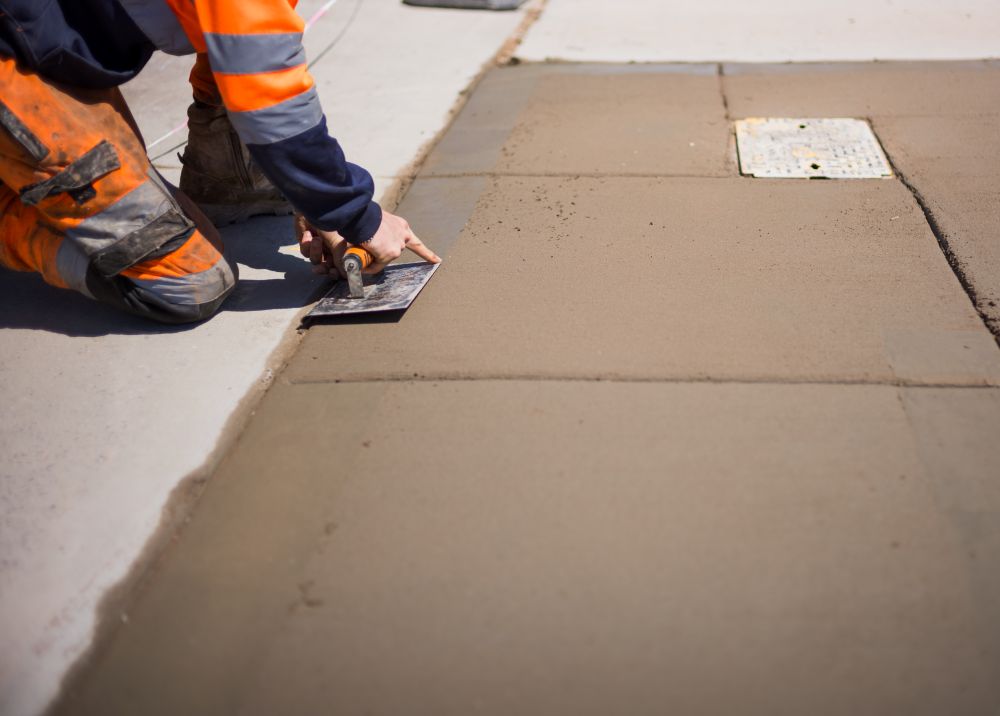
The small injection holes are filled with a color-matched cement, and once that patch sets — which takes just a few minutes to become firm to the touch — the surface is ready for normal use. You’re not waiting on the foam. You’re barely waiting on anything.
What “Normal Use” Actually Means at the 30-Minute Mark
Here’s where specifics matter, because “you can use it” covers a pretty wide range of activities:
- Foot traffic: Immediately after the crew leaves — zero waiting required once the injection holes are patched.
- Bicycles, scooters, wheelbarrows: Within 15–20 minutes, no problem.
- Passenger vehicles (sedans, SUVs, light trucks): 30 minutes is the standard recommendation, and in our experience this is genuinely conservative.
- Heavy vehicles (full-size pickup trucks, vans, SUVs with towing capacity): We recommend 1–2 hours just to be safe, though the foam is typically more than capable before that point.
- Commercial vehicles, heavy equipment, RVs: Give it a full day. Not because the foam needs it, but because you’re dealing with point loads that could stress the slab itself.
Temperature and Weather: The Variables That Can Actually Change the Timeline
In ideal conditions — say, 65–75°F on a dry afternoon in eastern Idaho — you’ll hit that 30-minute return time comfortably. But weather matters, and eastern Idaho’s climate means we deal with some real extremes.
Cold weather slows the foam’s chemical reaction. When it’s below 40°F, curing times extend. On a cold November day in Idaho Falls when temperatures are hovering near freezing, the foam might need closer to 45–60 minutes before we’d feel comfortable with vehicle traffic. Experienced crews like ours adjust injection technique and foam formulation for colder conditions, but physics still has a say. This is one reason Idaho Falls, ID Concrete Lifting & Leveling professionals who know local conditions are worth choosing over a regional chain that sends generic crews.
Heat, interestingly, speeds the reaction — but creates its own issues if it’s extreme. Very hot conditions (above 95°F on a dark-colored slab that’s been baking in the sun) can cause the foam to expand faster than intended, making precision lifting harder. A good technician accounts for this.
Rain doesn’t affect cured foam — polyurethane is hydrophobic and actually uses moisture in the soil as part of its curing process. But fresh rain right after injection, before the surface holes are patched? That warrants a few extra minutes of patience.
What About the Concrete Itself — Not Just the Foam?
Here’s a point that surprises some homeowners: the limiting factor in return time is almost never the foam. The foam is ready in minutes. The question worth asking is whether the concrete slab itself was already in a condition to handle normal loads.
If you had significant cracking before the lift, the lifting process doesn’t magically re-bond those cracks. A slab with major fractures that was lifted back into place is structurally more capable than a sunken one, but it still has existing vulnerabilities. Driving over hairline cracks that have been there for years? That’s fine. Parking a 9,000-pound truck on a slab with a major fracture running across the middle? That’s asking for trouble regardless of when you do it after lifting.
This is why a thorough assessment before lifting matters. If you’ve noticed signs of significant cracking or deterioration, read through our post on Signs Your Concrete Needs Lifting Before It Gets Worse to understand what’s worth fixing versus what might need full replacement.
The Driveway vs. Sidewalk vs. Patio Question
Location changes the calculus a bit. Here’s a practical breakdown:
Driveways
This is the most common concern, and the good news is also the most reassuring here. Passenger vehicle traffic at the 30-minute mark is standard and safe. If you have a heavy truck or are planning to park an RV, give it a few hours. The foam is ready; this is just a conservative buffer for high-weight scenarios.
Sidewalks and Walkways
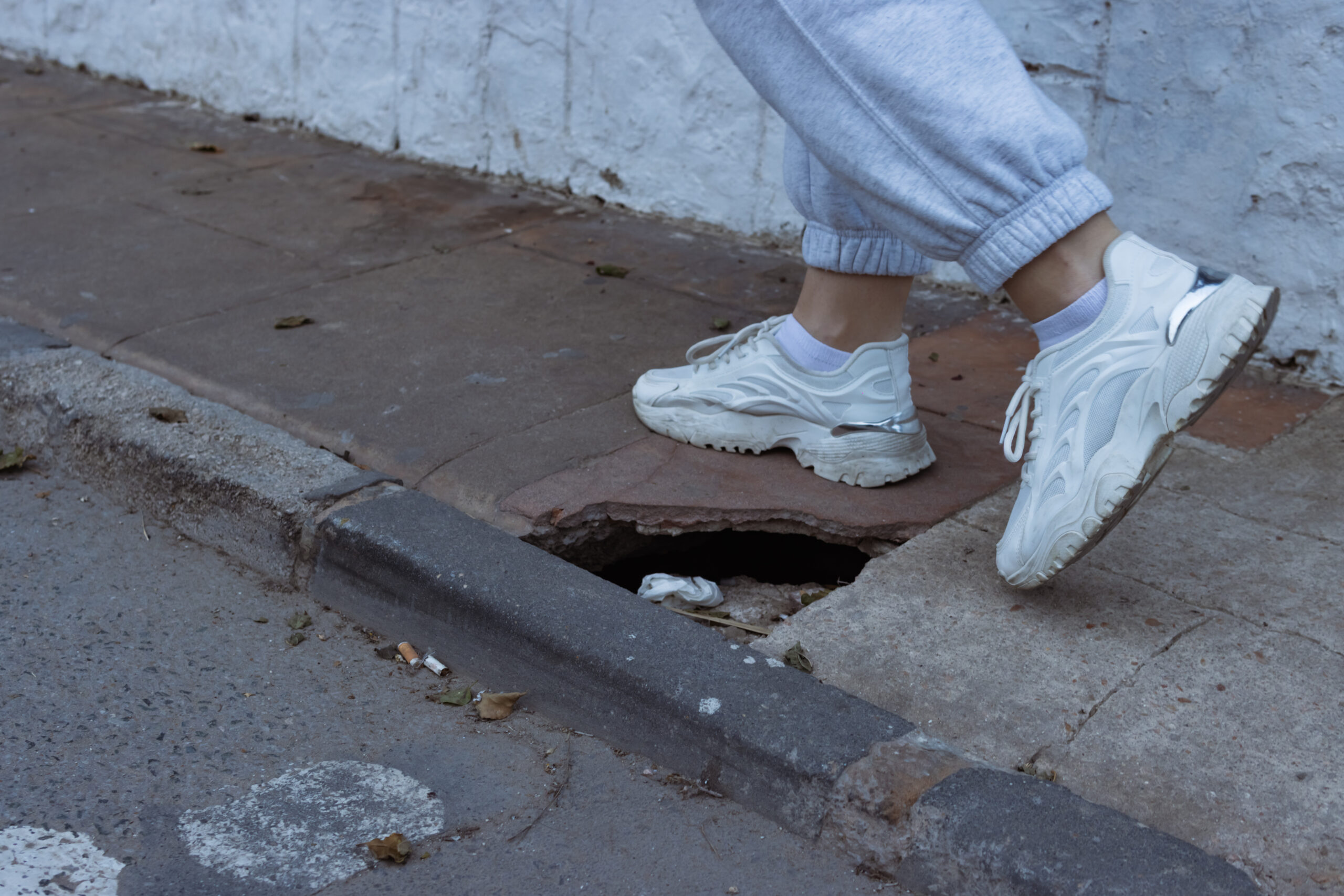
Foot traffic can resume immediately. Kids on bikes, adults with strollers, elderly family members with walkers — all good within minutes. There’s essentially no waiting for standard pedestrian use, which makes uneven concrete safety hazards something that can be addressed and resolved in a single morning.
Patios and Pool Decks
Foot traffic and patio furniture immediately. Grills, fire pits, heavy planters — same deal, within 30 minutes. If you have a massive stone fountain or an extremely heavy outdoor kitchen setup (think 1,000+ pounds), a one-hour wait is sensible.
Garage Floors
Pull your car back in after 30 minutes without hesitation. If you’re running a home shop and plan to roll in a loaded tool chest or work on the floor that same day, wait until the next morning — not for the foam, but to give the surface patches a full cure.
A Real-World Scenario: What a Typical Lifting Job Day Looks Like
Let’s say you schedule your driveway lift for 9 AM on a Thursday. The crew arrives, assesses the slabs, and marks the injection points. By 9:15 they’re injecting. By 9:45 — maybe 10:00 if it’s a larger job — the injection holes are patched and the crew is packing up. By 10:15, you’re pulling your car back into the driveway for your 10:30 AM Zoom call.
That’s the reality of polyurethane concrete lifting. The disruption to your day is genuinely minimal. Compare that to a mudjacking job where you can’t touch that driveway until Saturday at the earliest — or a full replacement where your driveway is torn up for a week and you’re looking at 28-day curing times before the new concrete reaches full strength.
The cost difference is also worth understanding. If you’re wondering how polyurethane lifting stacks up financially against those alternatives, our post on How Much Does Concrete Lifting Cost in Eastern Idaho? breaks down realistic numbers for our region.
What to Do (and Not Do) Immediately After Your Lift
A few practical tips for the hours immediately following your job:
- Don’t seal the concrete the same day. If you were planning to apply a concrete sealer, wait at least 24–48 hours. The surface patches need a full cure before anything is applied on top.
- Do check for any residual movement. Walk the lifted areas an hour after the job. Properly done foam lifting should hold perfectly still. Any continued settling warrants a call back to the crew.
- Don’t power wash the injection patches for 24 hours. The color-matched filler is durable, but give it a day before hitting it with high pressure.
- Do take photos before and after. You’ll want a record of the improvement, and it helps if there’s ever a question about warranty work.
- Don’t ignore adjacent problem areas. Sometimes lifting one slab reveals that a neighboring section has a void underneath. Flag it for follow-up. Our post on what causes concrete to sink explains why problems rarely appear in isolation.
The Bottom Line
Polyurethane foam concrete lifting is, without exaggeration, one of the fastest-turnaround repair methods in home improvement. The 15–30 minute return-to-use window isn’t marketing language — it’s the chemistry of a material that was specifically engineered for speed and structural performance.
For most homeowners, the practical answer is: walk on it immediately, drive on it in half an hour, and don’t give it another thought. Reserve a few hours of patience for extreme vehicle weights, and give fresh patches a day before sealing or power washing.
If you’re still in the research phase — comparing options, understanding the full process, or wondering if your specific situation is a good candidate for lifting — explore our Blog for everything from cost breakdowns to technical explainers, or take a look at Our Work to see real before-and-after results from jobs in the Idaho Falls area.
The concrete under your feet doesn’t have to stay broken, and fixing it doesn’t have to wreck your week. That’s kind of the whole point.