
Front steps take a beating. They carry every trip in and out of the house, they sit right where roof water lands, and in Eastern Idaho they spend months under snow and ice. When a stoop sinks or tilts away from the house, it’s usually noticed at the door first: the threshold is suddenly a taller step up, or there’s a gap where the concrete used to meet the siding. At Solid Lifters, we lift and level concrete for homeowners around Eastern Idaho, and steps are a job where knowing what’s under the concrete decides which fix makes sense.
Here are your options for settled steps, stoops and landings, and why fall is a good time to deal with them.
First, Figure Out What Kind of Steps You Have
Solid Poured Steps
Many steps were formed and poured in place. Some are solid concrete all the way through. Others were built with soil, gravel or rubble inside the forms to save concrete, with a concrete shell on the outside. Either way, they rest on the ground under them, which is why they can settle.
Hollow and Precast Steps
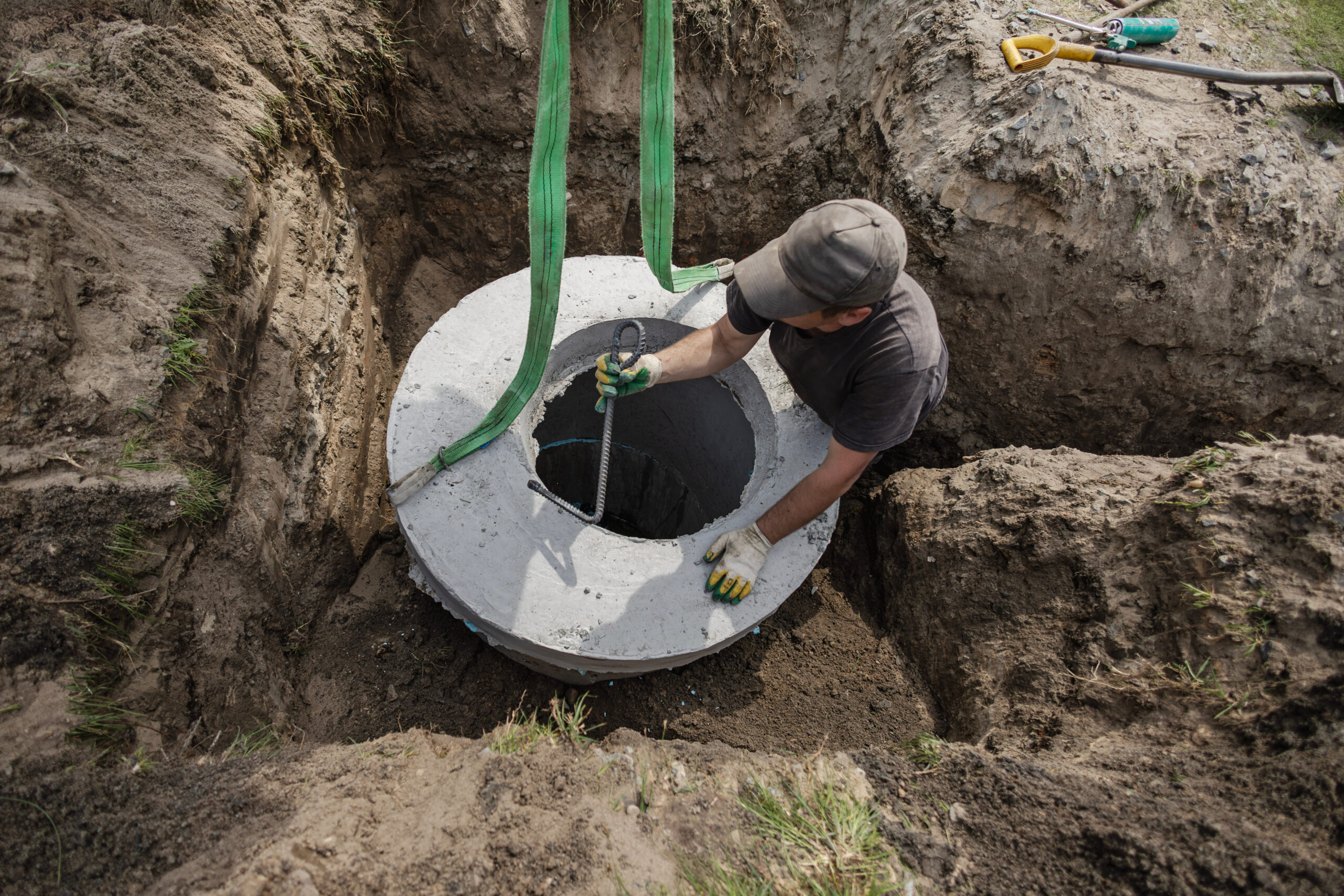
Precast steps are made off-site and set in place as a unit. Many are hollow underneath, like an upside-down box. They sit on a prepared base or on the ground, and when that base settles, the whole unit tilts or drops.
If you’re not sure which you have, look at the sides. Precast units usually have crisp, uniform edges and may show a seam where they meet the house or walk. A quick look at the inspection will settle it.
Why Steps and Stoops Sink
- Backfill next to the foundation. Steps usually sit on soil that was dug out and refilled when the house was built, which keeps settling for years.
- Roof water. A downspout or a missing gutter that dumps water at the steps softens and washes away the soil under them.
- Freeze and thaw. Water that gets under the steps freezes and thaws through the winter, loosening the soil beneath.
Signs Your Steps Need Attention
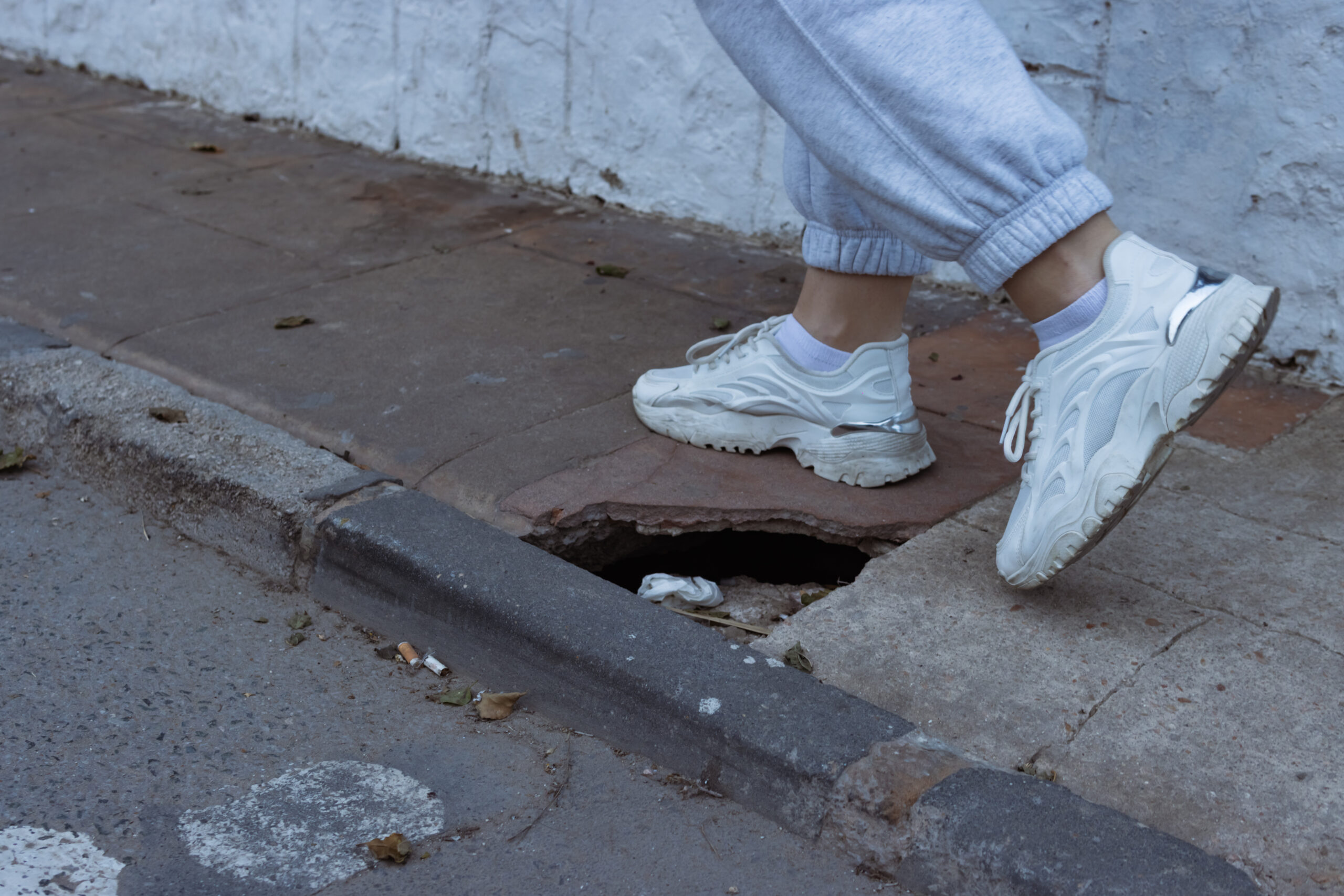
- A gap between the stoop and the door threshold, or between the steps and the foundation
- Steps that tilt toward the house, so water runs back toward the foundation
- Treads that tilt forward or sideways
- A handrail post that’s no longer straight or has loosened in the concrete
- A lip where the bottom step meets the sidewalk
Option 1: Lifting
What it is: Small holes, about 5/8 inch across, are drilled into the steps or landing, and polyurethane foam is injected underneath to fill empty space and raise the concrete. The holes are patched with a color-matched cement. For the full process, see how polyurethane concrete lifting works.
Best for: Solid or filled steps that are in one piece and have settled or tilted. Lifting can close the gap at the threshold and correct a tilt toward the house.
Limits: Hollow steps are harder. The cavity underneath may need to be filled before the unit can be raised, and sometimes a hollow unit is better reset than lifted. Steps that are badly broken or crumbling usually aren’t good candidates.
Option 2: Resetting
What it is: Precast steps can be lifted off with equipment, the base underneath rebuilt and compacted, and the unit set back in place.
Best for: Precast units that are in good shape but sitting on a failed base.
Limits: It needs equipment access and a contractor who handles precast steps. It doesn’t apply to steps poured in place.
Option 3: Rebuilding
What it is: Demolishing the old steps and forming and pouring new ones.
Best for: Steps that are cracked through, crumbling, or that you want to redesign anyway (wider, different rise, a bigger landing).
Limits: It’s the most disruptive option, the entry is out of service while new concrete cures, and new concrete rarely matches the color of the walk around it.
For a closer look at the tradeoffs, our article on when concrete lifting beats replacement goes deeper.
The Threshold Gap and Handrail Posts
A stoop that drops away from the house leaves a gap where water, snowmelt and debris can get down against the foundation. After a lift closes that gap, sealing the joint between the stoop and the house helps keep water out.
Handrails anchored into the concrete move when the steps move. After lifting, check that every post is plumb and tight. A rail that’s loose in its anchor should be repaired by a railing installer or handyman.
Why Fix Steps Before Ice Season
A step that tilts even slightly holds water on the tread or sends it toward the house. Once temperatures drop, that water becomes ice at the one spot everyone has to walk. Uneven steps are a trip risk year-round, and our article on whether uneven concrete is a safety hazard covers icy conditions.
Scheduling also gets harder as the season changes. Our article on the best time to schedule concrete lifting in Eastern Idaho explains how weather affects timing.
Frequently Asked Questions
Can concrete porch steps be lifted?
Solid or filled steps that are in one piece usually can be. Hollow precast steps are sometimes better reset, depending on their condition and what’s underneath.
Why are my concrete steps pulling away from the house?
Most often because the soil under them, which is usually backfill next to the foundation, has settled or been washed out by roof water.
Should I fill the gap between my stoop and door threshold with caulk?
Sealing slows water down, but if the stoop has sunk, the gap will keep growing. Fixing the height first and then sealing the joint is the longer-lasting approach.
Get Your Steps Ready for Winter
If your front steps or stoop have sunk, tilted or pulled away from the door, find out which option fits before the ice arrives. Learn about our sidewalk and walkway leveling services, then contact Solid Lifters for a free inspection and bid.