
The street end of a driveway gets treated differently than the rest of it. It catches water running down the gutter, it takes the brunt of the snowplow’s berm every winter, and every car that turns in crosses it at an angle. It’s no surprise that the approach is often the first part of a driveway to sink. At Solid Lifters, we lift and level driveways across Eastern Idaho, and the approach is a spot homeowners notice every time they pull in.
This explainer covers the street end only: why the approach settles, what causes the lip at the gutter, and what plow berms and winter traffic do to it.
What the Driveway Approach Is
The approach (also called the apron) is the section of concrete that runs from your driveway out to the street. Where the curb has been lowered or shaped for a driveway, that opening is called a curb cut. Depending on your street, the approach may cross a sidewalk before it meets the gutter.
That short stretch of concrete sits between two very different pieces of construction: your driveway on one side and the city street on the other.
Why the Approach Settles
Disturbed Soil Near the Street
The ground near the street is some of the most dug-up soil on your property. Street construction, curb and gutter work, and utility lines running along the road all leave backfilled soil behind. That soil can keep settling for years.
Water From the Gutter
Gutters are built to carry water, and a lot of it runs right past the end of your driveway. If the joint between the approach and the gutter is open, water can get underneath and wash soil away.
Turning Traffic
Cars don’t cross the approach straight on. They turn in, cutting across the corner, which puts uneven loads on the edges. Larger vehicles and trailers add more.
Freeze and Thaw
Water that gets under the approach freezes and thaws through the winter, loosening the soil further. Our article on how freeze-thaw cycles damage Eastern Idaho concrete explains that process.
The Lip at the Gutter
When the approach settles and the gutter doesn’t, a lip forms where the two meet. It’s the bump you feel every time you pull in or out, and it causes more than a jolt:
- Water pools at the bottom of the driveway instead of draining into the gutter.
- That water turns to ice in winter, right where cars and people cross.
- Vehicles scrape, especially low cars and trailers with a long overhang.
- The edge gets chipped by tires, shovels and plows.
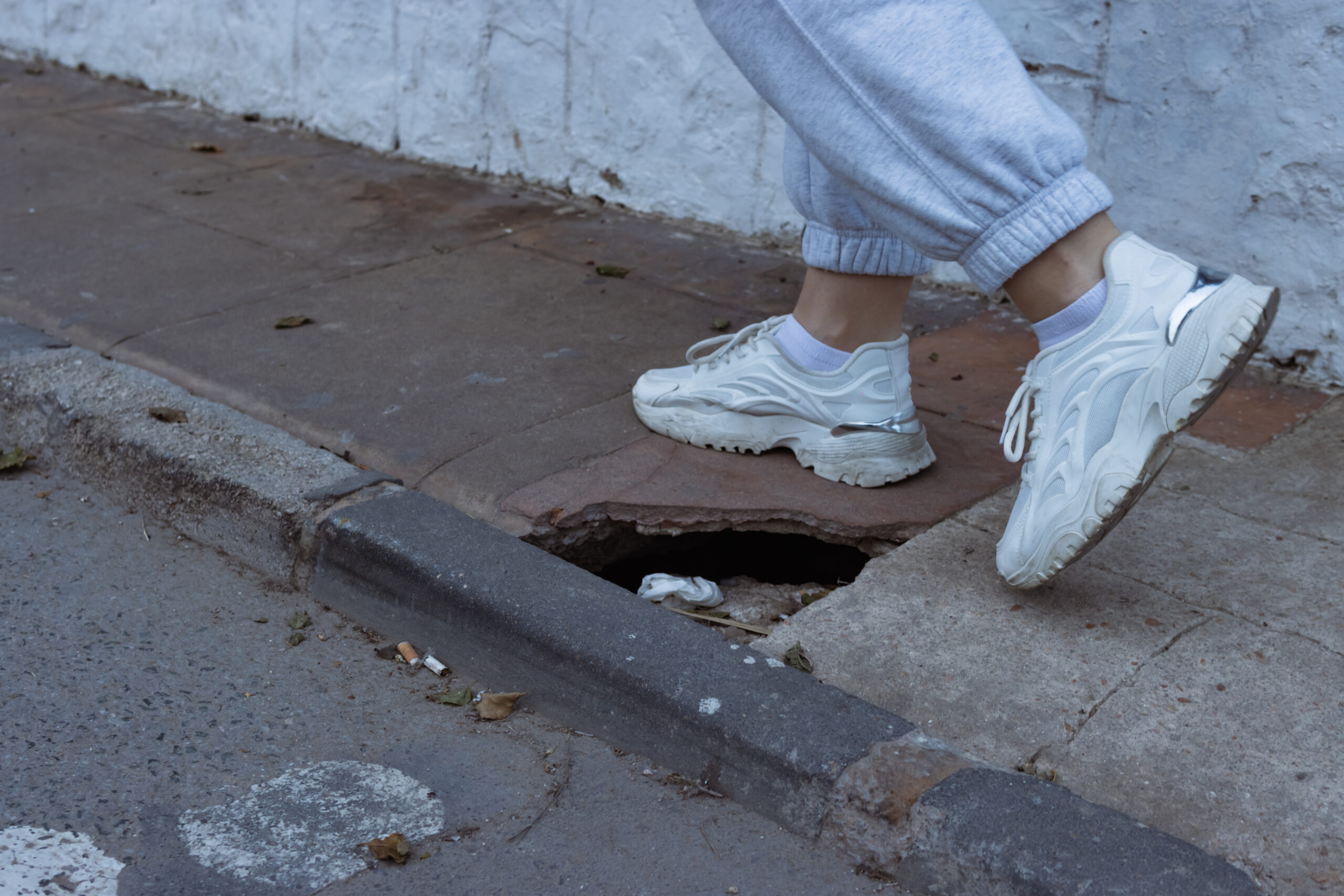
Sometimes the approach sinks at the sidewalk crossing instead, leaving a lip where it meets the walk. That creates a trip hazard for anyone walking by.
What Snowplows and Winter Do to the Approach
When the city plows your street, the blade pushes a berm of snow across the end of your driveway. That berm causes a few problems for the concrete underneath.
- Meltwater sits at the approach. As the berm melts, water collects at the lowest point, which is often right at a settled approach or the gutter lip.
- It refreezes overnight. Repeated melting and refreezing puts extra freeze-thaw stress on the concrete and any open joints.
- Edges take hits. Plow blades and the equipment used to clear the berm can chip or break a raised edge, especially if there’s already a lip.
A level approach that drains into the gutter handles winter much better than one that holds water.
Check With Your City First
Part or all of your driveway approach may sit in the public right-of-way, and cities have their own rules for work there. Before repairing the approach or the sidewalk it crosses, check with your city about who’s responsible and whether a permit or approval is needed. If a sidewalk at your approach has become a trip hazard, our article on sidewalk trip hazards and homeowner liability in Idaho covers that side of the question.
What Lifting Can Do for the Approach
Once any city questions are settled, a sunken approach can often be lifted back into line with the gutter and the driveway. Small holes, about 5/8 inch across, are drilled through the slab, and polyurethane foam is injected underneath to fill empty space and raise the concrete. Bringing the approach back up closes the lip and restores drainage into the gutter. After the lift, sealing the joint between the approach and the gutter helps keep water from getting underneath again.
If the approach is broken into small pieces or the gutter itself has failed, replacement may be the better answer.
Frequently Asked Questions
Why is there a lip between my driveway and the gutter?
Usually because the approach has settled while the gutter stayed in place. Soil near the street is often backfilled, and gutter water can wash it out from under the approach.
Is the driveway approach my responsibility?
It depends on your city. Part of the approach may be in the public right-of-way. Check with your city before making repairs.
Can snowplows damage my driveway approach?
Plow berms leave meltwater that refreezes at the approach, and plow blades or clearing equipment can chip raised edges. A level, well-drained approach holds up better.
Fix the Bump at the End of the Driveway
If your driveway approach has sunk below the gutter or the sidewalk, lifting may fix the lip before another winter of ice and plow berms. Learn about our driveway leveling services, then contact Solid Lifters for a free inspection and bid.