The Durability Question Every Homeowner Asks Before Committing
Before you spend money on concrete repair, you want to know one thing: how long will this actually last? It’s a fair question, and frankly, the answer depends heavily on which method you choose. Mudjacking has been the default fix for decades, and plenty of contractors still push it. But polyurethane foam lifting has steadily taken over the market for a reason — and longevity is a big part of the story.
Let’s cut through the noise and give you a real, honest comparison. We’ll talk numbers, materials, real-world conditions in Eastern Idaho, and what actually causes concrete to sink again after it’s been lifted. By the end, you’ll know exactly what you’re paying for and how long you can reasonably expect it to hold.
First: Why Concrete Sinks in the First Place
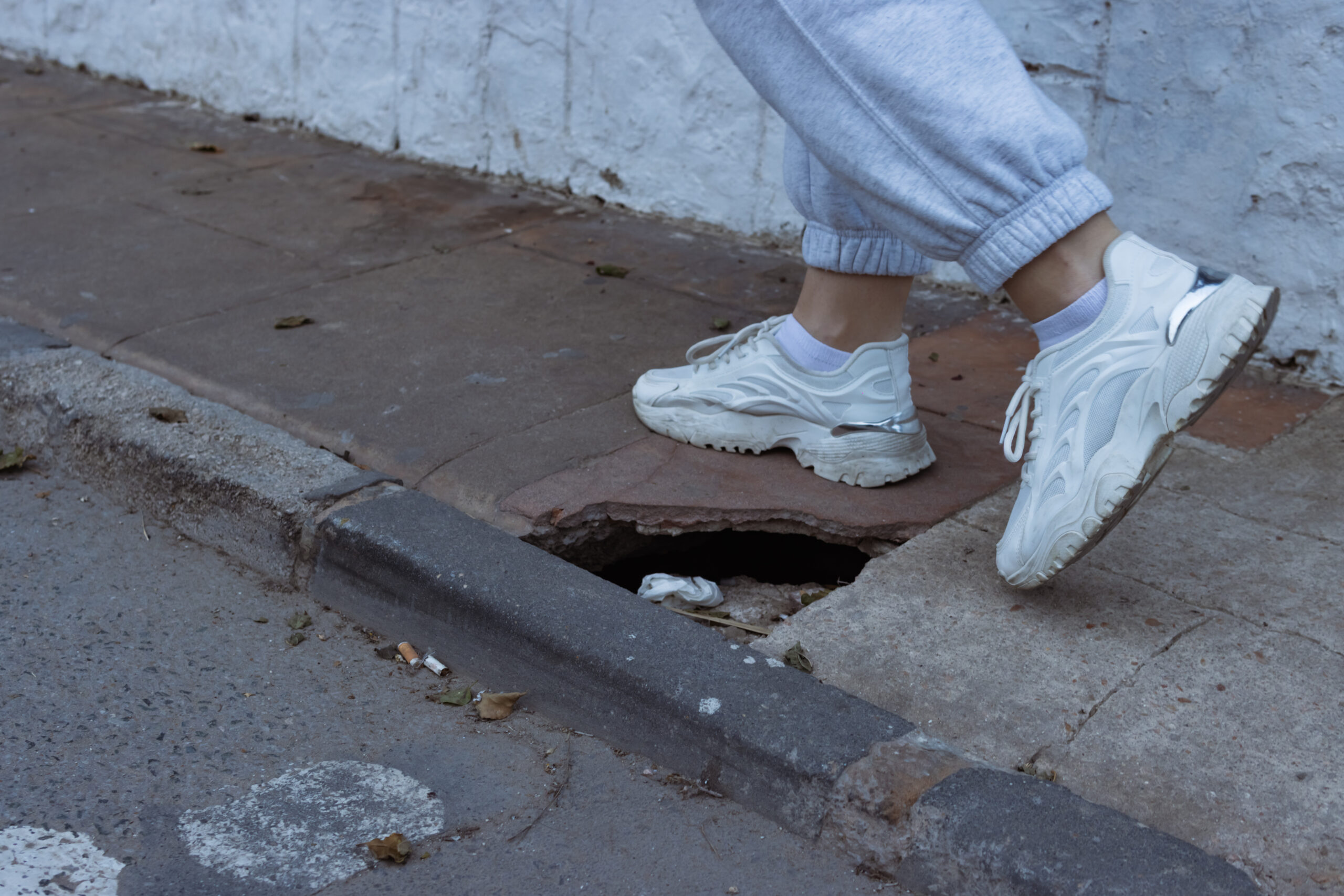
You can’t talk about how long a repair lasts without understanding what caused the problem to begin with. Concrete doesn’t just randomly decide to sink — the soil beneath it does. Erosion, poor compaction during original construction, freeze-thaw cycles, water infiltration, tree root activity, and even the natural settling of fill dirt can all create voids under your slab. When the soil can no longer support the concrete’s weight, gravity takes over.
Here in Eastern Idaho, the freeze-thaw cycle is particularly brutal. We’re talking ground that can heave several inches in a bad winter, then drop again in spring. That repetitive movement is constantly working against any repair you put in place. If you want to understand more about what’s happening beneath your driveway or sidewalk, our post on what causes concrete to sink around your home goes deep on the science.
The point is: the best repair in the world will fail prematurely if it doesn’t actually address the underlying soil problem — and this is where the two methods diverge dramatically.
Mudjacking: What You’re Actually Getting
Mudjacking (also called slabjacking or pressure grouting) has been around since the 1930s. The process involves drilling 1.5 to 2-inch holes through your concrete and pumping a slurry mixture — typically a blend of water, soil, sand, and cement — beneath the slab to lift it back into position.
When it works, it works reasonably well. The slurry fills voids and can raise a slab back to grade. But here’s the durability problem baked right into the material itself: that slurry is heavy. A cubic foot of mudjacking material weighs roughly 100-150 pounds. You’re putting more weight on soil that has already demonstrated it can’t handle the load. Over time, the added weight accelerates the very settling you were trying to fix.
On top of that, mudjacking slurry is porous. Water infiltrates it. In freeze-thaw climates like ours, that water expands and contracts repeatedly, breaking down the material from the inside. The typical real-world lifespan of a mudjacking repair? 5 to 8 years under normal conditions. Some repairs fail in as little as 2-3 years, especially in areas with heavy water movement or significant freeze-thaw activity.
Polyurethane Foam: A Fundamentally Different Animal
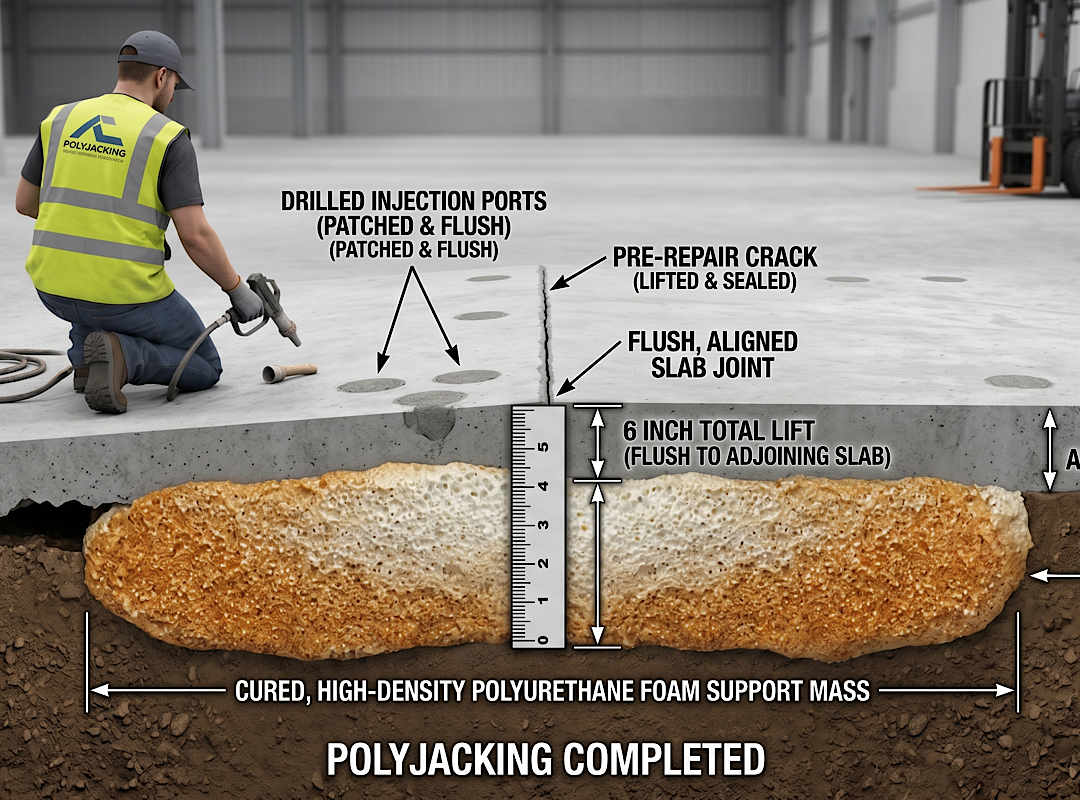
Polyurethane concrete lifting works on an entirely different principle. Instead of pumping heavy slurry through large holes, a two-part polyurethane foam is injected through tiny 5/8-inch holes. The two components react chemically beneath the slab, expanding to fill voids and lifting the concrete with controlled, precise pressure.
If you want a detailed breakdown of the actual process, our post on how polyurethane concrete lifting works is worth reading before you make any decisions. But for this comparison, what matters most is what happens after the job is done.
The cured foam weighs about 2-4 pounds per cubic foot — compared to mudjacking slurry’s 100-150 pounds. That’s not a small difference; it’s a fundamental shift in how much additional stress you’re placing on already-compromised soil. The foam also:
- Is completely waterproof after curing — it won’t absorb moisture or degrade from water infiltration
- Remains stable through freeze-thaw cycles because it doesn’t hold water
- Bonds directly to the underside of the concrete slab, reducing future movement
- Reaches full cure strength within 15-30 minutes of injection
- Maintains its shape and density for decades when properly installed
The realistic lifespan of a quality polyurethane foam concrete lifting job? 10 to 15+ years, with many installations lasting 20 years or more depending on soil conditions and moisture management. That’s not marketing fluff — the material science backs it up. High-density polyurethane foam used in construction applications is rated to last decades.
Side-by-Side: The Numbers That Actually Matter
| Factor | Mudjacking | Polyurethane Foam |
|---|---|---|
| Average Lifespan | 5–8 years | 10–20+ years |
| Material Weight | 100–150 lbs/cu ft | 2–4 lbs/cu ft |
| Hole Size Drilled | 1.5–2 inches | 5/8 inch |
| Cure Time | 24–72 hours | 15–30 minutes |
| Water Resistance | Porous, absorbs moisture | Fully waterproof |
| Freeze-Thaw Performance | Degrades over time | Stable and resilient |
| Upfront Cost | Lower | Moderate (25–50% more) |
| 10-Year Cost (w/ repairs) | Often higher | Often lower |
The Real Cost Comparison Over Time
Here’s where a lot of homeowners get tripped up. Mudjacking is usually 25–50% cheaper upfront than polyurethane lifting. If you’re fixing a sunken sidewalk panel and the quote is $300 vs. $450, it’s tempting to take the lower number and move on.
But run the math over 15 years. If a mudjacking repair lasts 6 years on average and needs to be redone twice in that window, you’ve paid for the job three times. Meanwhile, a polyurethane repair done right may never need retreatment during that same period. Our post on how much concrete lifting costs in Eastern Idaho breaks down local pricing in real detail — it’s worth reading before you get quotes.
“The cheapest repair isn’t always the least expensive repair. When you’re dealing with soil problems, the fix that costs more today is often the one that actually sticks.”
There’s also the hidden cost of inconvenience. With mudjacking, your driveway or walkway is out of commission for 24–72 hours while the slurry cures. Polyurethane foam is fully cured in under 30 minutes. For a busy household or a business property, that difference is significant.
What Can Shorten the Lifespan of Either Method?
No repair is permanent if the underlying conditions continue to worsen. Here are the main factors that will reduce longevity regardless of which method you choose:
- Active water infiltration: If water is still channeling under your slab from a broken downspout, poor grading, or a plumbing leak, it will continue to erode soil. Fix the water source first.
- Organic soil: Soils high in organic material compress and decompose over time. Polyurethane foam handles this better because it doesn’t add weight, but no lifting method is a permanent solution if you have significant organic soil beneath your slab.
- Tree root activity: Roots can displace foam or slurry alike. If a large root system is the culprit, you may have a recurring problem regardless of repair method.
- Extreme settlement: If a slab has dropped 4–6 inches or more, the soil void is massive. In severe cases, even excellent foam installation may need supplemental compaction grouting or other interventions.
Spotting these problems early is crucial. Our post on signs your concrete needs lifting before it gets worse can help you catch issues before a minor correction becomes a major excavation project.
Why Eastern Idaho’s Climate Makes This Choice Especially Important
We can’t talk about longevity without talking about the specific abuse that Idaho Falls-area winters put on concrete repairs. The freeze-thaw cycle here is relentless. Water seeps into any porous material during wet months, then freezes and expands, then thaws. Repeat that process hundreds of times over several winters and it will eventually destroy any material that holds moisture.
Mudjacking slurry, being essentially a soil-cement-water mixture, is fundamentally porous. It will hold some moisture, and that moisture will work against it every winter. High-density polyurethane foam, once cured, doesn’t hold water at all. It’s a closed-cell structure. The water has nowhere to penetrate and nothing to degrade.
This is arguably the single biggest factor in why polyurethane foam outlasts mudjacking in our region specifically. A repair that might last 8 years in Phoenix lasts 4–5 in Idaho Falls. The foam advantage is even more pronounced here than in warmer climates.
Is There Any Situation Where Mudjacking Makes More Sense?
Honestly? For most residential applications in Eastern Idaho in 2026, polyurethane foam is the stronger choice from a durability standpoint. But mudjacking can still be appropriate in specific scenarios:
- Very large slabs where foam cost becomes prohibitive and the area isn’t subject to heavy freeze-thaw activity
- Temporary repairs where a property is being sold and only a short-term fix is needed to pass inspection
- Industrial applications with extremely heavy load requirements (though even here, high-density foam is increasingly preferred)
If you’re a homeowner with a sunken driveway, patio, pool deck, sidewalk, or garage floor, polyurethane foam is almost certainly the better investment. You can see what these finished repairs actually look like on our Our Work page — real jobs, real results, no stock photos.
What to Ask Any Contractor Before You Commit
Whether you’re considering mudjacking or polyurethane, the quality of installation matters enormously. A bad foam installation is worse than a good mudjacking job. Before signing anything, ask:
- What density of polyurethane foam do you use? (Look for 2-4 lb density for structural applications — anything lighter is cutting corners)
- How do you determine injection port placement? Random guessing vs. systematic grid placement makes a big difference in void fill coverage.
- What’s your process for addressing active water infiltration before repair?
- Do you offer any warranty on the work?
- Can I drive or walk on it same day?
For a complete homeowner’s overview of what the repair process involves and what questions matter, check out our guide on concrete lifting in Idaho Falls: what homeowners need to know.
The Bottom Line on Longevity
Polyurethane concrete lifting isn’t magic. It doesn’t fix poor soil forever, and it won’t outrun severe ongoing water erosion without addressing the source. But under normal residential conditions in Eastern Idaho, a quality polyurethane foam lift will realistically outlast a mudjacking repair by 2x or more. It’s lighter on the soil, impervious to water, freeze-thaw stable, and bonds directly to your slab.
If you’re dealing with a safety hazard — and uneven concrete absolutely qualifies, as we explain in our post on whether uneven concrete is a safety hazard — the goal isn’t just to fix it today. It’s to fix it in a way you won’t have to revisit in three years. That’s what separates a real solution from a temporary patch.
We’re based right here in Idaho Falls, ID serving the concrete lifting and leveling needs of Eastern Idaho homeowners. If you have a slab that’s settling, we’re happy to take a look and tell you honestly whether lifting makes sense, which method fits your situation, and what you can realistically expect it to cost and how long it will last. No pressure, no upselling — just straight answers from people who do this every day.