You’ve got a rental property in Idaho Falls, and the sidewalk leading to the front door has a 2-inch trip hazard. Or maybe the patio slab out back has sunk so badly that water pools against the foundation wall. You’re staring at a problem that costs money either way—fix it now or deal with something worse (and more expensive) later.
For rental property owners, every dollar spent on maintenance gets scrutinized hard. Is this a necessary expense or can it wait another season? With concrete issues specifically, that question has a pretty clear answer—but it depends on understanding what you’re actually dealing with and what your real options are. Let’s dig into the math, the liability, and the logistics so you can make a smart decision.
The Real Cost of ‘Waiting It Out’
Every spring in eastern Idaho, the freeze-thaw cycle does its damage. Soil contracts, water infiltrates, and concrete that was merely uneven last fall becomes genuinely dangerous by May. Rental property owners who defer concrete repairs often find that a $600 polyurethane lifting job becomes a $4,500 full slab replacement 18 months later. That’s not a hypothetical—it’s the pattern we see consistently at properties throughout the Idaho Falls area.
Here’s why the math works against waiting: sunken concrete doesn’t stabilize on its own. The void beneath that slab is still there. Every rain event, every irrigation cycle, every winter thaw fills that void with more water, which displaces more soil, which creates more settlement. A slab that’s dropped an inch will often drop another inch before it stops—and by then, the slab itself may have cracked under the stress in ways that make lifting impossible.
If you want a real number to work with, check out our breakdown of how much concrete lifting costs in eastern Idaho—the short version is that polyurethane foam lifting typically runs 50-75% less than full replacement, and for rental properties, that difference directly affects your return on investment.
Liability Is Not Something to Gamble With
Let’s be blunt about something most property owners don’t think through carefully enough: in Idaho, a landlord’s duty to maintain safe premises is not optional. If a tenant trips on a heaved sidewalk panel, falls on a sunken garage apron, or twists an ankle on a settled driveway edge, you are exposed. Significantly exposed.
We covered this in depth in our post on whether uneven concrete is a safety hazard, but for rental properties the stakes are even higher than for owner-occupied homes. When someone else is living on your property and paying you for the privilege, the legal standard of care is real and enforceable.
Consider what a single slip-and-fall claim costs in legal fees, insurance deductibles, and rate hikes—even if you ultimately win the case. In many scenarios, those costs alone exceed what concrete lifting would have cost by a factor of 5 or 10. Insurance companies are also paying attention to deferred maintenance claims. Repeated incidents tied to known hazards can affect your insurability, not just your rates.
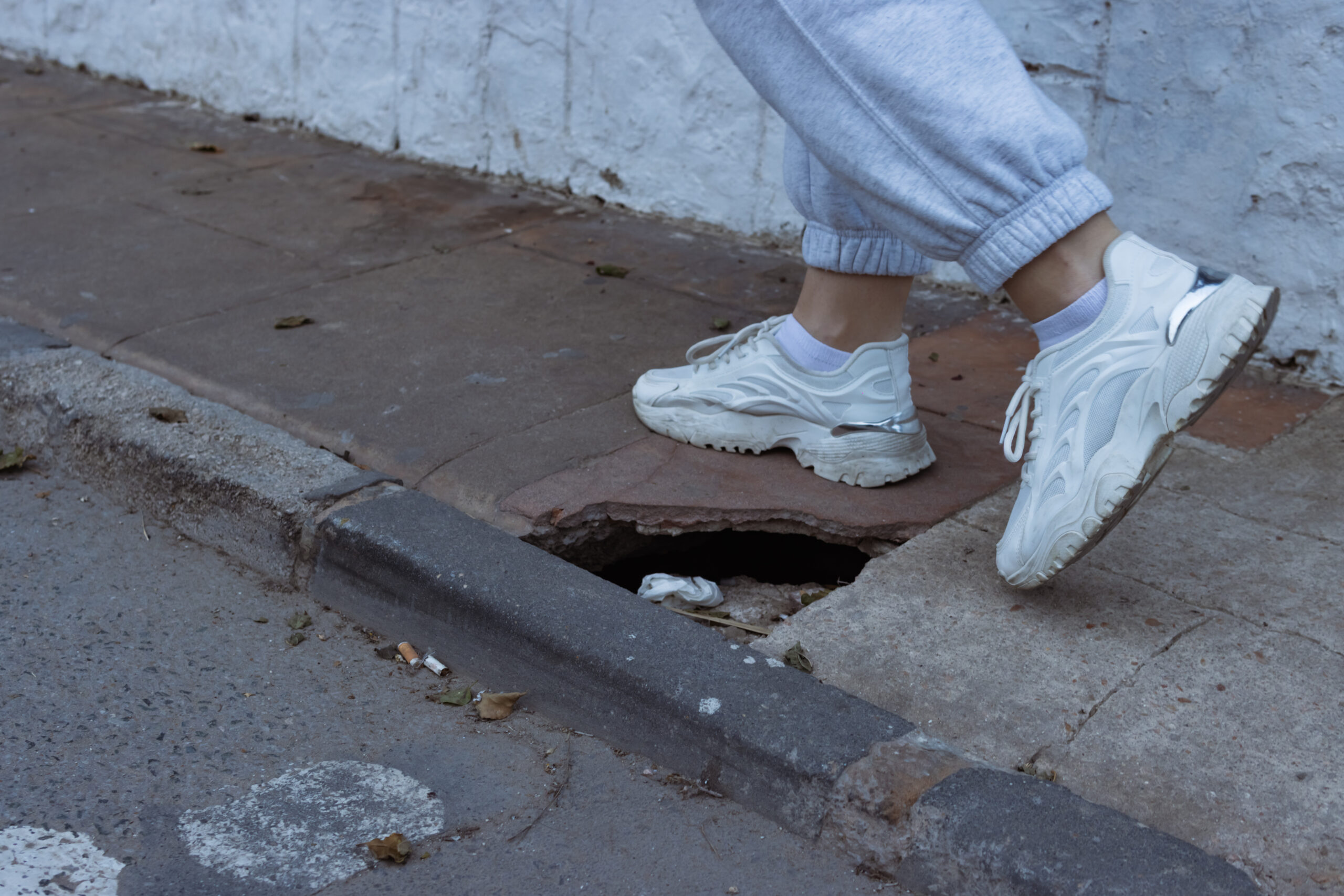
A ¾-inch lip on a sidewalk panel sounds minor. But it meets the threshold for a legitimate trip hazard under most legal definitions. If you’ve received written notice from a tenant about a concrete issue and you haven’t addressed it, your exposure increases considerably.
Concrete Lifting vs. Replacement: The Rental Property Calculation
For a personal residence, the decision between lifting and replacement sometimes comes down to aesthetics—replacement gives you fresh, uniform concrete. For a rental property, aesthetics matter far less than cost-effectiveness and speed. Here’s how the two options actually compare:
| Factor | Concrete Lifting | Full Replacement |
|---|---|---|
| Typical Cost (Idaho Falls) | $300–$1,200 per area | $1,500–$6,000+ per area |
| Tenant Displacement | None to minimal (2–4 hours) | 3–7 days minimum |
| Cure/Return to Use | Same day (15 min) | 28 days for full cure |
| Addresses Root Cause | Yes (fills void, stabilizes soil) | Not always (same soil conditions) |
| Mess/Disruption | Minimal | Significant (demolition, haul-off) |
| Longevity | 10+ years typical | 15–25 years (but subject to same soils) |
The displacement factor alone makes concrete lifting significantly more attractive for occupied rental properties. You’re not asking your tenant to navigate around a construction zone for a week or relocating them temporarily—the crew shows up, does their work in a few hours, and the surface is walkable the same afternoon. That’s a massive practical advantage when you have someone paying rent and living on the property.
What’s Actually Happening Under Idaho Falls Concrete
Eastern Idaho has some specific soil and climate characteristics that make concrete settlement more common here than in many other parts of the country. Understanding why it happens helps you evaluate whether lifting is a permanent fix or just a temporary patch.
The Snake River Plain soils around Idaho Falls tend to be volcanic in origin—they can be surprisingly unstable when disturbed and recompacted. Irrigation is everywhere in this area, and consistent watering cycles do two things: they saturate soil around slabs (causing settlement when that soil washes away or compresses) and they create clay expansion and contraction that works at concrete from below.
Add in frost depths that can hit 24–36 inches in a hard Idaho winter, and you’ve got a recipe for concrete movement. Our post on what causes concrete to sink around your home goes into this in detail, but the key point for rental property owners is this: the polyurethane foam used in modern lifting actually addresses the void and stabilizes the soil, so it’s not just cosmetically fixing the surface. You’re filling the problem, not just raising the slab.
This is meaningfully different from older mudjacking methods, which used a heavier cement slurry that added weight and sometimes reintroduced moisture. If you want to understand exactly how the polyurethane process works—and why it’s better for properties in our climate—read through our explanation of how polyurethane concrete lifting works.
Spotting Problems Before They Become Expensive
One thing experienced rental property owners learn quickly: the tenants who report problems early are your best allies. A tenant who tells you about a 1-inch settled sidewalk section in June is saving you from dealing with a 3-inch gap in November and a liability claim in January.
Building regular visual inspections into your property management routine isn’t optional—it’s how you catch concrete issues while they’re still cheap to fix. The warning signs to watch for include:
- Any lip or edge difference between adjacent slab panels (even ½ inch matters)
- Cracks that are widening, not just surface-level
- Water pooling against foundation walls or near the home’s perimeter
- Garage floor slopes toward or away from the drain that weren’t there before
- Visible gaps between the slab and surrounding soil or landscaping
- Doors or windows that suddenly don’t close correctly (sometimes a sign of foundation-adjacent slab movement)
Our guide on signs your concrete needs lifting before it gets worse is worth bookmarking and reviewing before your annual property walkthroughs. Catching problems at stage one rather than stage three is almost always worth the effort.
The Tax and Accounting Angle Worth Knowing
Here’s something most contractors won’t tell you, but your CPA should: concrete lifting on a rental property is typically expensed as a repair and maintenance cost rather than capitalized as an improvement. That means you deduct it in the current tax year rather than depreciating it over 15 or 27.5 years.
Full concrete replacement, on the other hand, is often classified as a capital improvement—you depreciate it over time. So not only does concrete lifting cost significantly less upfront, it’s often more favorable from a tax treatment standpoint. The repair vs. improvement classification depends on specifics (always confirm with your tax professional), but for smaller lifting jobs on existing concrete, expensing them in the current year is common practice.
In a competitive rental market, expenses that hit your current-year return matter. A $700 lifting job you can deduct now beats a $3,500 replacement you capitalize and depreciate over years—both in terms of cash flow and the tax timing.
When Lifting Isn’t the Right Answer
To be completely straight with you: concrete lifting isn’t appropriate for every situation. There are cases where replacement is the correct call, even for cost-conscious rental property owners.
Concrete that has deteriorated through the full depth—spalling, crumbling, with rebar exposure—can’t be saved by lifting. Neither can concrete with structural cracks that have compromised the integrity of the slab itself. If a slab has broken into multiple small pieces or tilted severely enough that lifting would result in a warped surface, replacement makes more sense.
The good news is that an honest assessment from an experienced contractor will tell you quickly which category you’re in. A qualified concrete lifting specialist should be able to look at a slab and tell you within minutes whether it’s a good lifting candidate. If someone is pushing you toward replacement on concrete that appears structurally sound with uniform settlement, get a second opinion. If they’re pushing lifting on concrete that’s clearly at end of life, same advice applies.
For context on what a solid assessment looks like and what questions to ask, our post on concrete lifting in Idaho Falls: what homeowners need to know walks through the evaluation process in detail.
The Bottom Line for Idaho Falls Landlords
Concrete lifting for rental properties in Idaho Falls isn’t a luxury or a cosmetic upgrade—it’s a practical, cost-effective maintenance tool that protects your investment, limits your liability, and keeps tenants safe without major disruption. The math is straightforward: pay a fraction of replacement cost now, address the actual problem causing the settlement, get back to normal within hours, and deduct it as a current-year expense.
The properties that hold their value over 10 and 20 years are the ones where owners treated maintenance as an investment, not an expense to avoid. Concrete is part of that calculation.
If you manage multiple units in the area, it’s worth scheduling a walkthrough specifically to evaluate concrete conditions before the next winter cycle. Issues that exist now will be bigger and more expensive after another freeze-thaw season.
Take a look at our Our Work page to see real examples of rental and residential concrete lifting projects we’ve completed in the Idaho Falls area—the before-and-after results speak for themselves. And if you’ve got specific questions about your property’s situation, our Blog has a growing library of resources to help you make informed decisions without the sales pressure.
We’re here as a local resource for Idaho Falls, ID Concrete Lifting & Leveling—and we’d rather help you understand your options clearly than push you toward a service you don’t actually need.