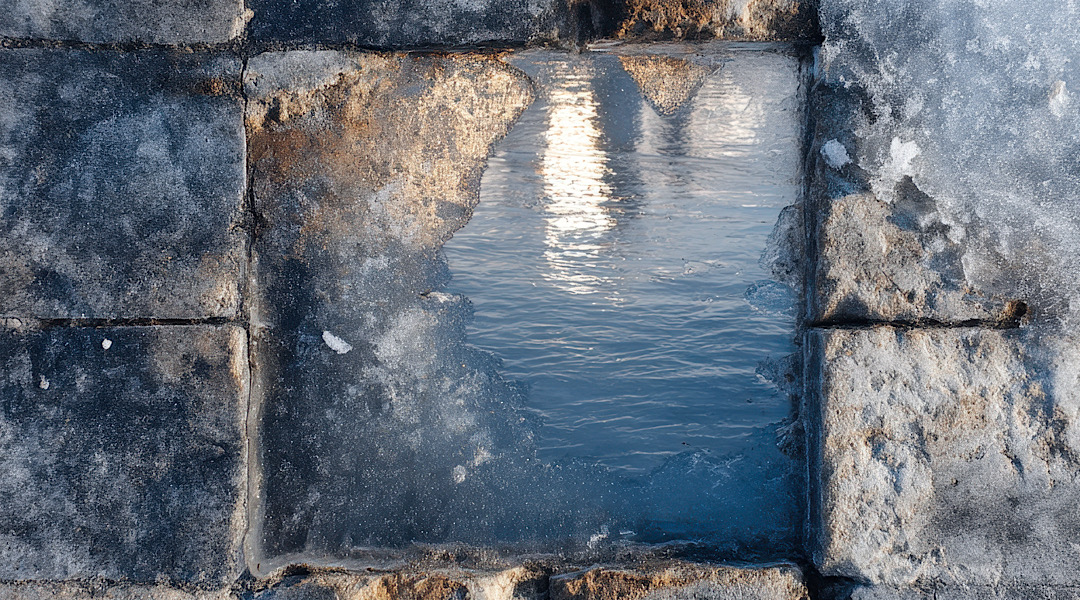
If you’ve lived in Eastern Idaho for more than a couple of winters, you already know the drill: temperatures swing wildly, snow piles up, and then a warm front rolls through and turns everything to slush — only to freeze solid again three days later. It’s brutal on your body, your vehicle, and as it turns out, especially brutal on your concrete.
What most homeowners don’t realize is that the damage happening to their driveway, sidewalk, or patio isn’t random. It’s a predictable, physics-driven process — and once you understand it, you’ll start noticing early warning signs long before a trip hazard appears or a slab sinks six inches into the ground. That knowledge alone can save you thousands of dollars.
Eastern Idaho’s Climate Is Uniquely Harsh on Concrete
The Idaho Falls and surrounding Eastern Idaho region doesn’t just get cold — it cycles. The Snake River Plain sits at roughly 4,700 feet elevation, which means the temperature whiplash is real. A single week in February can see overnight lows in the single digits followed by afternoon highs pushing into the upper 40s. That temperature swing isn’t just uncomfortable to dress for; it’s a relentless mechanical attack on any porous material exposed to moisture.
Meteorological data for the region shows that Idaho Falls experiences anywhere from 50 to 80 freeze-thaw cycles per year — meaning the temperature crosses the freezing mark in both directions at least that many times. Compare that to somewhere like Minneapolis, which sits farther north but experiences fewer oscillations because it stays frozen for longer stretches. Eastern Idaho’s relatively dry cold snaps punctuated by chinook-style warm spells create a particularly punishing rhythm for concrete.
And here’s the thing: it’s not the cold itself that destroys concrete. It’s the water. Always the water.
The Physics Nobody Explains Clearly Enough
Concrete looks solid and impenetrable, but under a microscope it’s more like a sponge. A typical concrete slab has a network of tiny capillary pores and microcracks — some from the original curing process, some from regular use, some from minor soil movement over time. These pores absorb water. That’s just what concrete does.
Here’s where physics turns against you: when water freezes, it expands by approximately 9 percent in volume. Nine percent sounds small, but inside a confined pore in a rigid material, that expansion generates hydraulic pressures upward of 2,000 pounds per square inch. No concrete mix rated for residential use is designed to withstand that kind of internal pressure repeatedly.
The freeze-thaw cycle works like this:
- Water enters: Rain, snowmelt, or irrigation seeps into the surface pores and microcracks of the slab.
- Temperature drops: That water freezes and expands, forcing the crack or pore slightly wider.
- Temperature rises: The ice melts, leaving behind a slightly larger void than before.
- More water enters: The larger void now holds more water, and the cycle repeats with greater force.
- Cumulative damage: Over dozens or hundreds of cycles, surface spalling, cracking, and eventually structural failure occur.
This is why concrete deterioration in Eastern Idaho tends to accelerate over time rather than progress at a steady rate. The damage compounds on itself. A hairline crack in year three becomes a half-inch gap by year eight, and by year twelve you’re looking at a slab that’s fractured, sunken, and potentially dangerous.
Surface Damage vs. Structural Damage — Know the Difference
Not all freeze-thaw damage looks the same, and recognizing what you’re dealing with helps you respond appropriately. There are essentially two categories: cosmetic surface damage and structural damage that affects the slab’s integrity and position.
Surface Spalling and Scaling
This is the flaking, pitting, and roughening you see on older driveways and sidewalks. The top layer of concrete essentially delaminated from freeze-thaw pressure combined — often — with the application of road salt or deicing chemicals. Those chemicals accelerate the process significantly by pulling moisture deeper into the slab and increasing the frequency of freeze-thaw cycles within the concrete itself. If your driveway looks like it has a skin condition, this is why.
Surface spalling is largely cosmetic in early stages, though it creates a rougher surface that traps more water and accelerates future damage. Sealing early is your best preventive move here.
Cracking and Joint Failure
Expansion joints are built into concrete specifically to give it somewhere to move. But over years of freeze-thaw cycling, those joints fill with debris, lose their flexibility, and cracks begin forming in unintended places. You’ll see these running diagonally across a slab corner, along the length of a driveway panel, or creating a spiderweb pattern across a patio. Once cracks penetrate the full depth of a slab, water has direct access to the sub-base beneath — and that’s where the real trouble begins.
Slab Settlement and Sinking
This is the big one. When water repeatedly enters through cracks and reaches the soil sub-base, freeze-thaw cycles don’t just damage the concrete — they destabilize the ground beneath it. Soil expands when frozen and contracts when it thaws, gradually shifting and settling unevenly. Add to that the erosion effect of water washing fine soil particles away through those same cracks, and you’ve got a recipe for slab settlement.
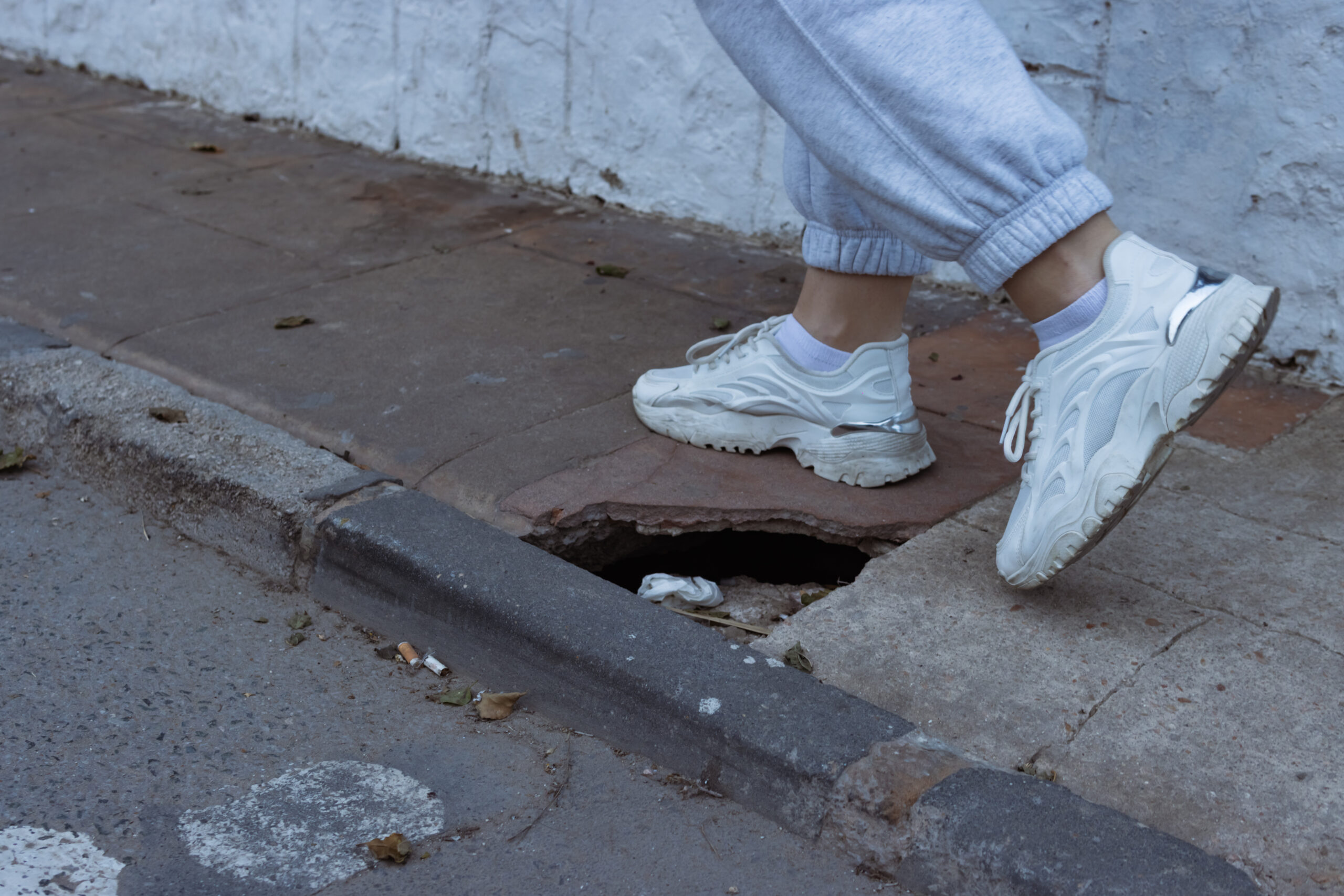
The result is the classic uneven concrete problem: a panel that has sunk two inches lower than its neighbor, a sidewalk section that tips toward the house, a garage approach that’s developed a lip that catches car bumpers and sends pedestrians stumbling. If you’re seeing this at your property, there are specific signs that tell you how urgently you need to act.
Why Eastern Idaho Soil Makes This Worse
The geology of the Snake River Plain adds another layer of complexity. Much of the soil in the region is volcanic in origin — mixed with alluvial deposits from ancient Lake Bonneville. This creates soil profiles that can vary dramatically even within a single yard: dense basalt near the surface in some areas, loose silty loam in others, and occasional pockets of poorly-draining clay.
Clay soil is particularly problematic. It absorbs and holds water like a sponge, expanding when wet and shrinking when dry — a process called shrink-swell that adds its own cyclical movement independent of freeze-thaw. When you combine frost heave from freeze-thaw cycles with shrink-swell movement from clay soil, concrete slabs don’t just settle uniformly downward. They tilt, twist, and fracture in unpredictable patterns.
Understanding what causes concrete to sink around your home requires looking at both the freeze-thaw factor and the underlying soil conditions together — they’re inseparable in this region.
The Deicing Chemical Problem
Every winter, well-meaning homeowners grab a bag of ice melt from the hardware store and scatter it across their driveway and sidewalks. It works great for traction — and it significantly accelerates concrete deterioration. This is a topic worth spending a moment on because it’s counterintuitive.
The issue isn’t that deicing chemicals are eating away at the concrete chemically (though some do). The primary damage mechanism is physical: by lowering the freezing point of water, deicers keep moisture in liquid form at temperatures where it would otherwise have frozen. That liquid water then penetrates deeper into the concrete before refreezing when temperatures drop further, creating more extreme internal pressure than would occur naturally.
Calcium chloride and magnesium chloride — the “safer” alternatives to sodium chloride — actually increase the number of freeze-thaw cycles concrete experiences because they extend the temperature range in which water remains liquid. For a fresh concrete slab, the first two to three winters are the most critical period. High-quality concrete needs at least a full curing season to reach the density that provides adequate freeze-thaw resistance.
If you have a newer driveway or patio, consider sand for traction rather than chemical deicers for the first few winters. Your slab will thank you.
What Good Concrete Installation Looks Like in This Climate
Prevention starts with the original pour. Concrete installed in Eastern Idaho with freeze-thaw resistance in mind looks different from the minimum-spec work that gets done to hit a budget number. Here’s what matters:
- Water-to-cement ratio: Lower ratios (below 0.45) produce denser concrete with fewer capillary pores. Less porosity means less water infiltration means less freeze-thaw damage.
- Air entrainment: This is the single most important variable. Air-entrained concrete has tiny, intentionally introduced air bubbles distributed throughout the mix. These bubbles act as pressure relief valves, giving freezing water somewhere to expand without forcing apart the concrete matrix. Properly air-entrained concrete (5-7% air content for severe exposure) can survive freeze-thaw cycles that would destroy standard concrete.
- Adequate thickness: Thinner slabs lose heat faster and freeze more deeply. Four inches minimum for walkways, five to six for driveways.
- Proper sub-base compaction: A well-compacted, well-draining base reduces the moisture available to work its way up through the slab.
- Curing time: Concrete poured in fall needs adequate time to cure before hard freezes hit. Late-season pours are a gamble in Eastern Idaho.
If your existing concrete wasn’t installed with these considerations — or if it was poured 15-plus years ago before these practices were standard — it’s already operating at a disadvantage every winter.
When Freeze-Thaw Damage Becomes a Safety Issue
There’s a tendency to view uneven or crumbling concrete as purely an aesthetic problem. It’s not. Uneven concrete is a genuine safety hazard, particularly for older adults, children, and anyone carrying something that obstructs their view of the ground.
According to the CDC, falls are the leading cause of injury-related emergency room visits for adults over 65. A single raised concrete edge of three-quarters of an inch can catch a toe and send someone to the hospital. From a liability standpoint, if someone trips on your property — a guest, a delivery driver, a neighbor — your homeowner’s insurance and potentially your personal assets are on the line. The cost of addressing sunken concrete is almost always a fraction of what a single slip-and-fall claim costs.
Repair Options: Not All Solutions Are Equal in This Climate
Once freeze-thaw damage has progressed to the point of slab settlement, you’re looking at repair rather than prevention. The two main options are mudjacking (pumping a slurry beneath the slab) and polyurethane foam lifting.
In Eastern Idaho’s climate, polyurethane concrete lifting has significant advantages over traditional mudjacking. Polyurethane foam is hydrophobic — it repels water rather than absorbing it. Mudjacking slurry, by contrast, is essentially a wet soil mixture that can erode, wash away through cracks, and contribute to future freeze-thaw problems. Foam also cures within 15-30 minutes and is lightweight, adding minimal additional load to already compromised sub-base soil.
For a detailed look at what this work actually costs in our region, concrete lifting costs in Eastern Idaho vary based on slab size, accessibility, and extent of the voids — but the numbers are typically far more attractive than full replacement.
The Seasonal Window: When to Act
Eastern Idaho gives you a relatively clear action window for concrete repair: late spring through early fall. Polyurethane lifting can technically be done year-round, but optimal results come when ground temperatures are above freezing and the soil has had a chance to stabilize after winter movement. Waiting until June or July means the ground has dried out and settled from spring thaw, giving you a more accurate picture of where voids have formed beneath your slabs.
Fall can work too — particularly August through early October — if you want repairs done before winter cycling begins again. What you want to avoid is letting damaged, unlevel concrete go through another winter without attention. Each freeze-thaw season that passes without repair is another season of expanding voids, worsening cracks, and more water infiltrating into places it shouldn’t be.
You can see examples of what this work looks like in real Eastern Idaho applications on our Our Work page — actual before-and-after results from local projects, not stock photos from other parts of the country.
The Bottom Line on Freeze-Thaw and Your Concrete
Freeze-thaw damage is inevitable in Eastern Idaho. The climate doesn’t give you a choice about that. What you do have a choice about is whether you catch problems early — when a small void beneath a slab can be filled with foam and the panel lifted back into place — or whether you ignore the signs until you’re looking at a full replacement that costs ten times as much.
Watch for cracking that gets progressively wider, surface spalling that exposes aggregate, and any panel that’s settled more than a half-inch relative to its neighbors. Those are your early warning indicators. Concrete lifting in Idaho Falls is a well-established solution at this point — the technology works, the results are durable, and the process is far less disruptive than you might expect.
The freeze-thaw cycle isn’t going anywhere. But its ability to destroy your concrete? That’s something you have more control over than you might think.