The Fork in the Road Every Idaho Homeowner Eventually Faces
You’re standing in your driveway, staring at a slab that’s dropped two inches on one side, and your first instinct is probably to call a concrete contractor for a full replacement. It’s what most people do. Tear it out, pour it fresh, problem solved. But before you commit to that decision — and the five-figure bill that often comes with it — there’s a conversation worth having about whether that slab actually needs to go.
Concrete lifting (sometimes called mudjacking or polyurethane foam lifting) has matured into a legitimate, long-lasting repair method that a surprising number of homeowners don’t know exists. And in Eastern Idaho’s specific climate and soil conditions, understanding the difference between lifting and replacement isn’t just about saving money — it’s about making the right call for your property’s long-term health. Let’s break this down honestly, without the sales pitch.
What Actually Happens When Concrete Sinks
Before comparing solutions, it helps to understand the problem. Concrete doesn’t sink because concrete fails — it sinks because the ground underneath it does. In Idaho, this happens for a handful of consistent reasons: freeze-thaw cycles that heave and compress soil over and over, poor initial compaction when the slab was first poured, water erosion washing fine particles away from beneath the slab, and tree roots disrupting the subbase.
Here’s what makes this critical to the lifting-vs-replacement decision: if you replace the slab without fixing the soil problem underneath, the new slab will sink too. This is the conversation most replacement contractors won’t initiate. A brand-new concrete slab sitting on compromised soil is, in many cases, just an expensive reset button. Understanding what caused the sinking is step one, and it informs everything else. For a deeper dive on this, check out our post on what causes concrete to sink around your home.
Concrete Lifting: How It Actually Works
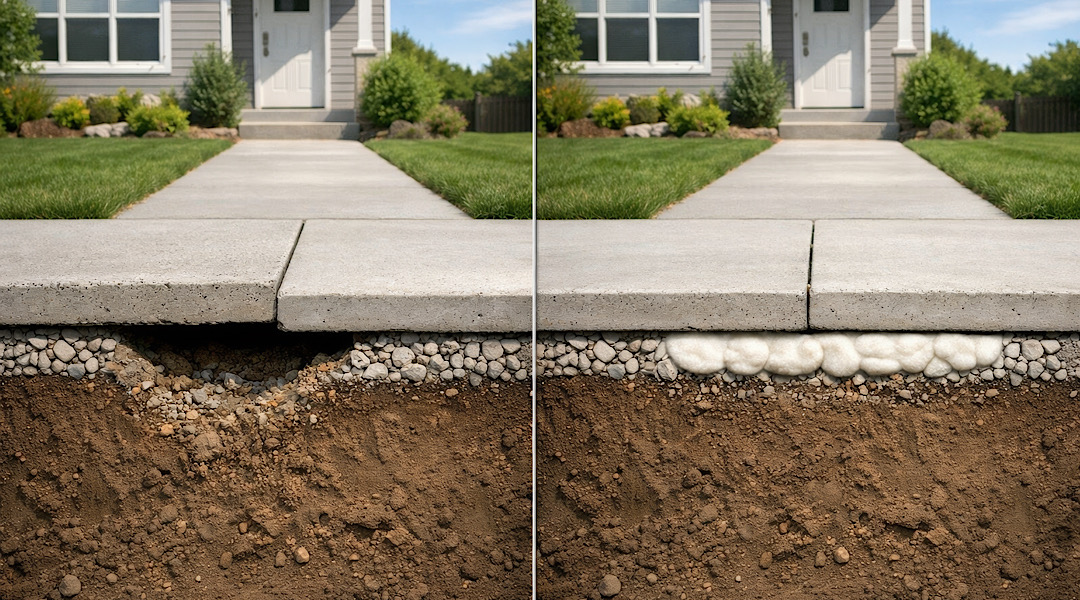
Modern polyurethane concrete lifting is genuinely impressive technology. Small holes — roughly the diameter of a dime — are drilled through the sunken slab. A two-part polyurethane foam is then injected beneath the concrete. The foam expands, filling voids, compressing loose soil, and hydraulically lifting the slab back to its original position. The foam cures within minutes, and the holes are patched. You can walk on it in under an hour.
This is different from traditional mudjacking, which uses a cement-slurry mixture that’s heavier, takes longer to cure, and can itself contribute to future sinking. Polyurethane foam is lightweight — it weighs about two pounds per cubic foot compared to over 100 pounds per cubic foot for concrete — and it doesn’t absorb water or break down in freeze-thaw conditions, which matters enormously in Idaho’s winters. If you want to understand the mechanics in detail, our guide on how polyurethane concrete lifting works covers the full process.
The Honest Cost Comparison
Let’s talk numbers, because this is usually what drives the decision. In Eastern Idaho in 2026, concrete replacement typically runs between $6 and $12 per square foot for materials and labor — and that’s before you factor in demolition and disposal of the old concrete, which can add $2–$4 per square foot more. A 400-square-foot driveway replacement? You’re looking at $3,200 to $6,400 minimum, and often more for thicker slabs or complex access situations.
Polyurethane concrete lifting, by comparison, typically costs 25–50% of what replacement would run for the same area. A sunken driveway section, patio, or sidewalk that would cost $3,000 to replace might lift for $800–$1,500. That’s not a rounding error — that’s a meaningful difference in your household budget.
For a detailed breakdown of local pricing, our post on how much concrete lifting costs in Eastern Idaho gets into the specifics. But the short version: lifting almost always wins on cost, sometimes dramatically.
“The slab we lifted last spring had been giving that family trouble for three years. They’d gotten a replacement quote for $4,200. We lifted it in two hours for a fraction of that. Two months later, they called back to have us do the patio.” — Solid Lifters crew lead
When Lifting Makes Clear Sense
Lifting isn’t a universal solution, but it’s the right call more often than most homeowners realize. Here are the situations where it’s almost always the smarter choice:
- Settlement without major cracking: If your slab has sunk but is still structurally intact — few cracks, no crumbling edges — it’s an excellent candidate for lifting.
- Void formation beneath the slab: This is exactly what polyurethane foam is designed to address. It fills the void and stabilizes everything in one step.
- Driveways, patios, and walkways: These surfaces are typically 4–6 inches thick and in good structural condition. Lifting restores them to full function at a fraction of replacement cost.
- Pool decks: Replacement around a pool is a logistical nightmare. Lifting is clean, fast, and avoids the headache of working around water and plumbing.
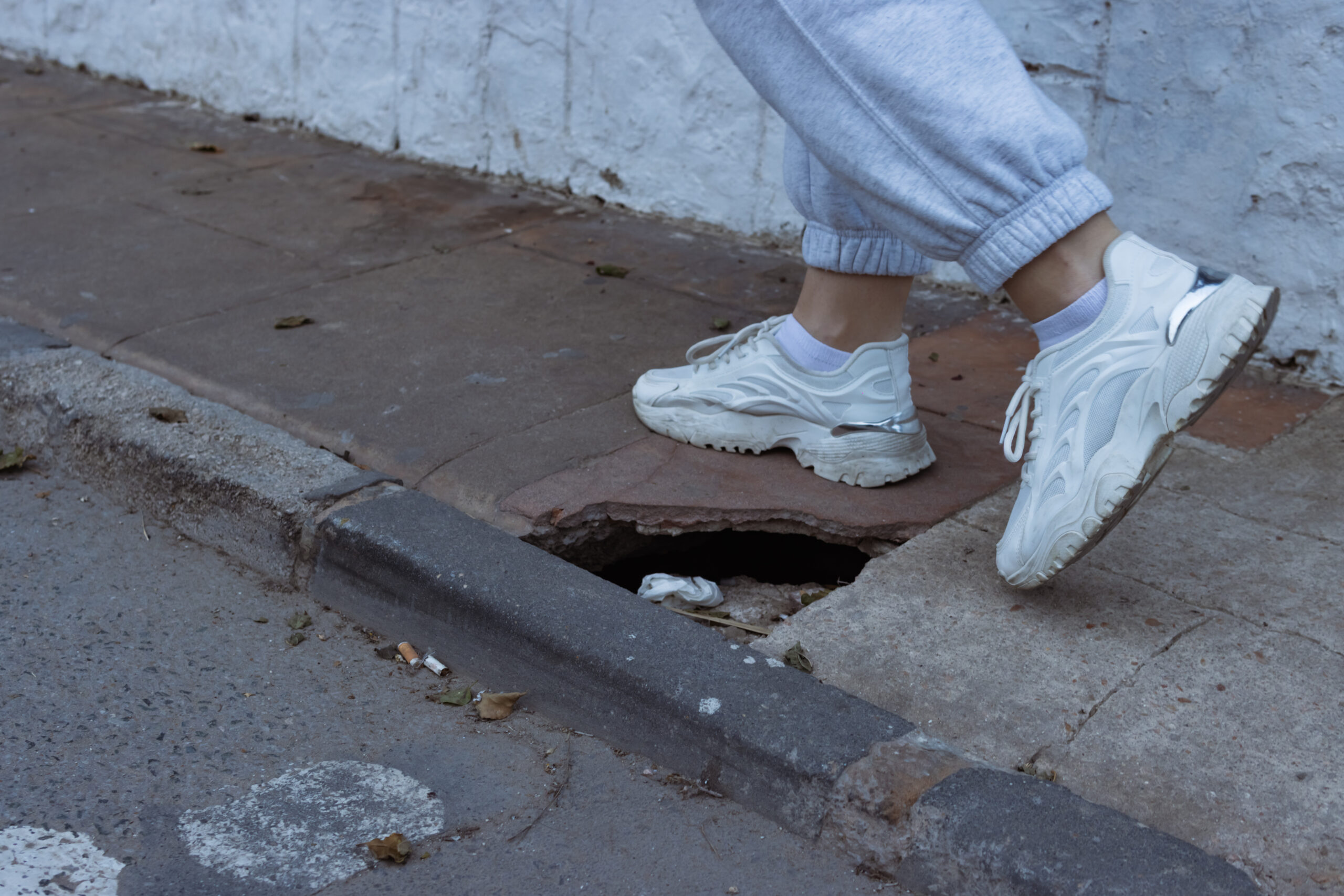
- Trip hazards at joints: A slab that’s dropped even half an inch at a control joint is a genuine safety risk. Lifting corrects this quickly — and if you’re wondering just how serious that risk is, our post on uneven concrete as a safety hazard covers the liability implications in detail.
When Replacement Is the Right Answer
Being honest here matters. There are absolutely situations where lifting isn’t appropriate and replacement is the correct choice. Here’s when to go that route:
- Severely deteriorated concrete: If the surface is scaling, spalling, or crumbling, lifting a damaged slab just gives you a level but still-deteriorating surface. It needs to go.
- Multiple large cracks throughout the slab: Hairline cracks are normal and don’t disqualify a slab from lifting. But if you’ve got significant cracking in multiple directions, the structural integrity may be compromised enough that lifting won’t hold.
- Frost heave damage that’s repeated and severe: If your soil conditions are causing repeated extreme heaving every winter, lifting might be a temporary fix rather than a lasting one. In these cases, addressing the drainage and soil issues alongside replacement is the real solution.
- Slabs thinner than 3 inches: Older, thinner slabs sometimes can’t withstand the injection process without additional cracking.
- Tree root intrusion: If roots have physically lifted or fractured the slab, you need to deal with the roots first. Lifting won’t overcome active root pressure.
If you’re unsure which camp your concrete falls into, the signs your concrete needs lifting post is a helpful starting point for self-assessment.
A Side-by-Side Look: The Real Differences
| Factor | Concrete Lifting | Full Replacement |
|---|---|---|
| Typical Cost | $500–$2,500 for most residential jobs | $3,000–$10,000+ for same areas |
| Completion Time | 1–4 hours typically | 2–5 days (cure time included) |
| Cure / Return to Use | 30–60 minutes | 24–72 hours minimum |
| Disruption to Property | Minimal — small drill holes, no demolition | Significant — jackhammering, hauling, forming |
| Environmental Impact | Low — no concrete waste | High — demolition debris to landfill |
| Addresses Root Cause | Yes — stabilizes soil and fills voids | Only if subbase is also addressed |
| Idaho Winter Suitability | Can work in cold temps; foam cures regardless | Concrete pours require temps above 40°F |
| Longevity | 10–15+ years when properly done | 20–30 years (if subbase is addressed) |
The Idaho Factor: Why Local Conditions Change the Math
Idaho’s geology and climate create some specific wrinkles in this decision. The Snake River Plain around Idaho Falls sits on volcanic basalt in some areas, but many residential neighborhoods are built on looser sedimentary soils that compact poorly and shift with moisture changes. The dramatic seasonal temperature swings — from single digits in January to the 90s in summer — mean freeze-thaw cycles are doing real work on your soil every single year.
This context matters because replacement concrete in these conditions isn’t a permanent cure without proper subbase preparation. Contractors who don’t compact and stabilize before pouring are handing you a ticking clock. Polyurethane lifting, on the other hand, actively improves the subbase condition — the foam fills voids and binds loose soil particles together, creating a more stable platform than what was there before.
If you’re an Idaho Falls area homeowner navigating this decision, our overview on concrete lifting in Idaho Falls is worth reading for the local specifics.
Questions to Ask Before You Decide
If you’re standing at the decision point right now, here’s a practical framework. Walk your slab and honestly assess:
- Is the concrete itself in good shape? Surface pitting and scaling means replacement. Solid concrete that’s simply sunk? Lifting is likely fine.
- What caused the sinking? Erosion and poor compaction respond well to lifting. Active root intrusion or drainage problems need to be fixed regardless of which option you choose.
- How much has it dropped? Most slabs that have settled 1–4 inches are excellent lifting candidates. Extreme settlement may mean the void beneath is too large to practically fill with foam alone.
- What’s the crack situation? A few control joint cracks? Normal. A spider web of structural cracking? Time to replace.
- What’s your timeline? Need it fixed before a family event next weekend? Lifting can happen in a day. New concrete needs 3–7 days minimum before you’re driving on it.
The Decision That Actually Saves You Money Long-Term
Here’s the nuanced truth most contractors won’t tell you: for most residential sinking situations, lifting is both the cheaper and the structurally smarter immediate fix. It addresses the void problem, doesn’t create construction debris, and gets you back to normal in hours. The money saved versus replacement can fund other home improvements or simply stay in your pocket.
But if your slab is genuinely at end-of-life — deteriorating surface, structural cracking, repeated failure — then spending money on lifting is throwing good money after bad. Get it replaced, and make sure whoever does it prepares the subbase properly.
The best way to know for certain? Get an honest assessment from someone who does both. If a contractor only offers one solution, their recommendation is going to skew toward that solution. At Solid Lifters, your Idaho Falls, ID Concrete Lifting & Leveling specialists, we’ll tell you straight whether your slab is a lifting candidate or whether you’d be better served replacing it — even if that means we’re not the right call for your project.
Take a look at Our Work to see the kinds of projects we’ve tackled, and visit our Blog for more resources to help you make the right call for your home.